I have been really interested in the Lechuguilla Cave lately, because it is very complex and contains a lot of mysteries. It stretches for nearly 1,600 feet! "The bacteria that grow on the walls of its most remote recesses have been living in complete isolation for more than four million years."
Gerry Wright, a microbiologist at McMaster University, came to New Mexico all the way from Ontario to preform experiments on the bacteria in the Lechuguilla cave. After culturing the walls and collecting the various bacteria in the cave, he doused them with different drugs that doctors have used for 70 years that can kill bacterial infections. But they bacteria from the cave wouldn't die. They were resistant to 14 antibiotics.
"Antibiotics were introduced in the mid-1900s. Each time a new drug was introduced, it would take years before bacteria that could resist it became common."
This is very strange because usually a microbe has to be exposed to the antibiotic to become resistant. But they bacteria in the cave have been "cut off from the world" for centuries; never exposed to antibiotics. Scientists believe that antibiotic-resistance genes are an ancient part of nature.
A new study from Dr. Nesme shows that these antibiotic resistant genes can be found in all environments around the world; from Antarctica to the bottom of the ocean. The question then arose, "If these genes are everywhere, what are they doing in bacteria?" Bacteria actually make their own antibiotics to fend off competitors, and can fend off their own poison. Bacteria use these resistant genes that have nothing to do with antibiotics. What these bacteria use these genes for is unknown.
This article was really cool to me. Writing these blogs help me learn something new about microbes every time. I wonder if scientists will ever find out what else bacteria is using the resistance genes for. The article was very well written and provided a ton of information, including two different studies from two different scientists. Way cool.
http://www.nytimes.com/2014/05/08/science/antibiotic-resistant-germs-lying-in-wait.html?action=click&module=Search®ion=searchResults&mabReward=relbias%3Ar&url=http%3A%2F%2Fquery.nytimes.com%2Fsearch%2Fsitesearch%2F%23%2Fcave%2Bmicrobes%2F
Thursday, May 15, 2014
Wednesday, April 30, 2014
Blog 14 - "Wild Yeast" Beers
Since we are heading to the Brewery tomorrow, I decided to
check around NY times for an article about beer making. I came across something
really odd about the yeasts used by beer/wine maker, Chad Yakobson. It is
called Brettanomyces. It is a ‘cousin’ of the domesticated, typical yeasts that
are normally brewed with. Brettanomyces is known as “wild yeast” – “a reference to its natural habitat (fruit skins) and to its volatile
temperament — “Brett,” as it is widely known, can lead to unpredictable
fermentations and gushing beer bottles, aromas politely described as funky, and
fear.” Usually brewers don’t want this type of yeast in their beer, and
try there hardest to sterilize all the equipment; But not Yakobson. He says
that this brings beer back to its roots, before there was sanitization.
Brettanomyces creates a whole new category of beers – “Brett Beers.”
Brewers who use
this type of beer making shoot for something along the lines of a pre – WWII Belgian
Brewery type beer. Instead of having a typical tasting beer, such as Budweiser,
Brett beer’s flavor can vary greatly. The flavors intensify in the bottle, “as
the yeast slowly metabolizes complex sugars.” Because the Brett beers
are so unique and ‘funky’ brewers think they will never become a mainstream
beer. It is also more expensive to brew Brett beer, and there is always a risk
that the wild yeasts will contaminate other ‘non-wild’ beers.
I enjoyed reading
this article. It was amazing to see that using ‘wild yeast’ can change the
flavor of the beer so drastically. There was really no argument in this
article, but it did have a lot of really cool information. The quotes from
actual Brett beer brewers helped inform the reader about what the beer is.
Pretty cool stuff.
Thursday, April 24, 2014
Blog 13 - Mapping the Great Indoors
Not really knowing
what to blog this week, I did a search on the good ole New York Times website; “Cave
Microbes.” I was expecting, well, something about microorganisms in caves. But the
key words pulled up an article related to microbes indoors. Weird, right?
The article I found
was actually pretty cool. It is about the microbiologist, Dr. Fierer, of
Boulder, Colorado, and his studies of all the organisms that live in our homes.
Fierer studies microbes in homes to, hopefully, come up with strategies to
manage homes, and eliminate all the harmful species, and keeping all the
beneficial ones. But first, they need to know what’s inside.
“Here’s an undeniable fact: We are an
indoor species. We spend close to 90 percent of our lives in dry walled caves.” In a typical home, you’ll find humans, dogs,
cats, maybe fish, ants, bugs… and billions of microbes. Fierer swabbed 82
surfaces in 4 Boulder homes, and the all the results were similar; bacteria,
staphylococcaceae, corynebacteriaceae, molds, species associated with raw
produce, etc... I found this part a little crazy: “The microbes living on your pillowcase are not
all that different from those living on your toilet seat.”
Fierer came to
the conclusion that humans rapidly “infect” the places in which they live. We
come in contact with 37 million bacteria per minute, just on our exposed
skin. Dr. Fierer teamed up with Rob Dunn
from North Carolina State University, and sampled 1,400+ homes, and the results are
still being analyzed.
I liked this article, it was very well
written, and had a lot of information. The intro to the article was cool
because it sounded like a story. I had a few questions, like what corynebacteriaceae is, but that was it. This article’s
audience was definitely for someone who knows about microbes because it had
some terms that I would not have known without this class. Towards the end of
the article there were questions that some people had, such as “If you
live in a forest, do you have different microbes than if you live in a desert?” in which he replied with “These are questions
we don’t have the answer to yet.” Overall good article, but rises a ton of
questions.
http://www.nytimes.com/2013/05/28/science/getting-to-know-our-microbial-roommates.html?pagewanted=2
Wednesday, April 16, 2014
Blog 12 - Demodex Mites
I was scrolling
around the web looking for blog ideas when I came across something known as the
Demodex Mite. These things are extremely weird, and a lot of people don’t know
anything about them.
“They crawl around your face at night, feeding off your oil
and skin cells. They have no anus, so eventually explode inside your hair
follicles.”
Yeah, you read that
right. And everybody has them. They are completely normal. Even though what
they do is very odd. During the day they grow in size feeding off of skin cells
and facial oil, then at night the female lay eggs inside hair follicles. When
they end up dying, it causes skin inflammation and irritation. What else is gross
is that they can be transferred just by touch.
“An overgrowth of the mites has been linked to conditions
such as rosacea, where people over the age of 30 develop sensitive red lumps
and bumps over their nose or the middle of the face.”
Because
they are normal, you cannot just scrub your face because excessive cleaning can
lead to other bacteria entering the skin. Just normal washing of the skin can
help prevent these nasty things.
http://www.smh.com.au/national/health/it-eats-your-skin-then-explodes-inside-meet-the-demodex-mite-20140414-36mfj.html
Wednesday, April 9, 2014
Blog 11 - Drug Resistant Bacteria Found in New Mexico Cave
Deep in the Lechuguilla Cave in New Mexico, microbiologists
have discovered close to 100 types of bacteria that can fight off antibiotic
drugs we use today. The bacteria in the
cave coat the walls, all the way down to 1,600 feet below the surface. Because
it is so deep, any water that trickles through the surface takes roughly 10
thousand years to reach the caves depths!
Even though the
cave is covered with bacteria, most of it is harmless to humans. They are completely resistant to antibiotics,
including newer synthetic drugs. These microbes will help scientists understand
how drug resistant diseases emerge.
Lechiguilla is the
deepest and largest cave system in Carlsbad. It is the seventh known longest
cave (130 miles). Until 1986, it was untouched by human activity. Hazel Barton,
a scientist from Northern Kentucky University, went in the cave and sampled
biofilms. When tested with antibiotics, these strains (known as superbugs) “can
immobilize, chew up, or block natural and synthetic antibiotic compounds.
One of the biggest
questions is which came first; Resistance or antibiotics? Were there originally
natural antibiotics deep underneath the earth and bacteria grew resistant to
it, or the other way around?
More research can help save time, and money; especially for pharmaceutical
companies. If a company wants to invest a billion dollars in researching a
single antibiotic, scientists should study and know if pathogens can build a
resistance to it.
This article was really cool, especially because it was from
a cave here in New Mexico. It was really
well written, and had input from several scientists. I didn’t have any
questions after reading it, but the audience is definitely for someone who
knows general information about microbes and bacteria.
http://news.nationalgeographic.com/news/2012/04/120411-drug-resistance-bacteria-caves-diseases-human-health-science/
Wednesday, April 2, 2014
Blog 10 - Algal Bloom Leads to Manatee Deaths
Since I have
focused most of my research on the Red Tide algae blooms this semester, this
was an article I came across. For those of you who don’t know, The Red Tide
Algae is a toxic bloom that occurs mainly in the Gulf of Mexico, it is pretty
harmless to humans, but it is known for killing massive amounts of sea life.
What I didn’t know, is that manatees are suffering greatly from it.
Manatees are already
an endangered species. There are only 5,000 manatees in the Floridian waters
and 241 manatees have been killed because of these algae. Experts say the
numbers are surely to rise. The dino flagellate microbes that make up the red
tide live in warm waters, as do manatees, and the water in Florida is the place
for that. Even though the numbers of red algae has dissipated, the toxins from it
still live on the grasses and seaweed in the water, and manatees can eat 100
pounds of grass daily.
Scientists are
still puzzled to see why the toxin levels are so high. The brevetoxins can kill
mammals, birds, aquatic life, and there have even been cases of respiratory problems
in humans. Some think that the mild winters helped the algae live longer. “So
far this year, at least 463 manatees have died from a range of causes, more
deaths than had been recorded previously” (April 6, 2013). Most deaths tied to
poison.
This article was
shocking. I couldn’t believe how many manatees have died from the brevetoxins,
and scientists still don’t know what to about it. It contained a bunch of
information about the problem, and was very well written. I didn’t find any
information on this year’s death rates, but hopefully it has gone down, and
scientists are coming up with ideas to help stop this problem.
http://www.nytimes.com/2013/04/07/science/earth/algae-bloom-in-florida-kills-record-number-of-manatees.html?action=click&module=Search®ion=searchResults%230&version=&url=http%3A%2F%2Fquery.nytimes.com%2Fsearch%2Fsitesearch%2F%3Faction%3Dclick%26region%3DMasthead%26pgtype%3DHomepage%26module%3DSearchSubmit%26contentCollection%3DHomepage%26t%3Dqry953%23%2Fred+tide+algae&_r=0
Blog 9 - Interview with Michael Pollan
Microbes are used a
ton in making various foods and drinks; as you know, cheese and beer are the
most popular. Brewers and cheesemakers are known as “fermentos”. These are the
kind of people who have a very “relaxed attitude” towards bacteria; unlike most
people.
In this article the author, Rachel Nolan,
interviews Michael Pollan, a food author. She asked him, “What surprised you
most about the microbiome’s possible effects on humans?” Pollan replied with
something I have never heard before. What surprised him (and me) most was that
our gut microbes can actually obtain genes from our food, thus changing their
genetic make-up. For example, people in American have different microbes than
people in Japan, because they have a gene that lets them metabolize seaweed.
This gene came from a microbe living on the seaweed.
Rachel then asked
Nollan how we can improve our micro biome, in which he responded with that
humans should garden. Exposing one’s body to soil can increase “microbial
pressure”. He also says that having a dog is good too.
She continues asking Pollan various questions
about micro biomes, but these are the most interesting. This article was very
cool because instead of reading a normal article, it was actually an interview
with an author of the book “Cooked”. Pollan did a ton of research on microbes,
and the article provided a lot of information I didn’t know. The only question
I had was what “microbial pressure” was. Overall, it was a cool read
http://6thfloor.blogs.nytimes.com/2013/05/20/behind-the-cover-story-michael-pollan-on-why-bacteria-arent-the-enemy/?action=click&module=Search®ion=searchResults%230&version=&url=http%3A%2F%2Fquery.nytimes.com%2Fsearch%2Fsitesearch%2F%3Faction%3Dclick%26region%3DMasthead%26pgtype%3DHomepage%26module%3DSearchSubmit%26contentCollection%3DHomepage%26t%3Dqry393%23%2Ffermented%2Bfood%2F
Wednesday, March 12, 2014
Blog 8 - Continuation of Human Microbiome
I am going
to be continuing this blog with the same article I used last week. Like I
stated before, this article is very long, and very dense. It has a lot of
information about personal experiences from the author, and many facts.
I ended last weeks with the information
about living communities and the microbes in a babies gut. When the author was
in Boulder, he actually had a microbiologist, Catherine A. Lozupone, look at
his Microbiome. As you may know, everyone has a different Microbiome. Usually
people have a “normal” gut, and are very similar. But gut biomes can differ
from various populations around the world. Scientists have conducted tests from
thousands of different communities in and outside the U.S. The American Gut
project will be able to uncover patterns between people’s lifestyles, diet,
health, and various makeups of their bodies Microbiome.
“microbially
speaking: we share unusually high levels of prevotella for Americans. Our gut
communities look more like those of rural Africans or Amerindians than like
those of our neighbors.” Lozupone said.
The gut Microbiome is a very popular subject in scientific
research. It is increasing in popularity, and most scientists are conducting
more and more tests from around the world, to help them better understand what
is actually going on in there.
This article is very well written. I like how the author
writes about personal experiences he has with microbiologists, and the
different things he has discovered with them. This article has so much useful
information, and is one of the best articles I have read so far.
http://www.nytimes.com/2013/05/19/magazine/say-hello-to-the-100-trillion-bacteria-that-make-up-your-microbiome.html?pagewanted=all&action=click&module=Search®ion=searchResults%230&version=&url=http%3A%2F%2Fquery.nytimes.com%2Fsearch%2Fsitesearch%2F%3Faction%3Dclick%26region%3DMasthead%26pgtype%3DHomepage%26module%3DSearchSubmit%26contentCollection%3DHomepage%26t%3Dqry116%23%2Fmicrobiome%2F&_r=0
Wednesday, March 5, 2014
Blog 7 - More about the Human Microbiome
Since we have
been doing a lot of recent work with the Human Microbiome, I searched New York
Times and found an article called, “Say Hello to the 100 Trillion Bacteria That
Make up Your Microbiome.” It was a very dense article with a ton of
information.
As you know, the
human body is home to, well, 100 trillion microorganisms, that live on your
skin, tongue, in your intestines, etc… and no two people are alike. When there
is a disorder in your body (or “wrong” kind of microbes) can expose the body to
obesity, viruses, and a range of diseases. Microbes in our system also play a
role in maintaining our immune system, and are able to identify good organisms
from the bad. Being able to study the different types of organisms in our body
can help scientists come up with a cure for most diseases; but that day is
still to come.
The author of this
article, Michael Pollan, wrote about his own experiences with the human Microbiome,
and what he has learned. Did you know that microbial communities of couples
sharing a home are similar? Or that having a dog increases the chance of
blending everyone’s skin communities within a given household? He also went
over how a baby’s gut community is highly colonized, versus being completely
sterile in utero. But a baby’s gut if
far different from an adults; they lack an enzyme to digest carbohydrates in
breast milk. It turns out that breast milk feeds a bacteria, Bifidobactrium infantis, which keeps the
baby healthy, and nurturing the integrity of the baby’s intestines.
This is about half the information in this article. Like I
said, it is very dense, and contains A TON of information. The main idea of the
story is basically all about microbes that live among our bodies, ranging from
adults and infants, and what those microbes do. I’ve learned quite a bit about
the human Microbiome, but this contains so much information that I haven’t heard
of before.
Since there was so much information, I will probably
continue next week’s blog, with this article.
http://www.nytimes.com/2013/05/19/magazine/say-hello-to-the-100-trillion-bacteria-that-make-up-your-microbiome.html?pagewanted=all&action=click&module=Search®ion=searchResults%230&version=&url=http%3A%2F%2Fquery.nytimes.com%2Fsearch%2Fsitesearch%2F%3Faction%3Dclick%26region%3DMasthead%26pgtype%3DHomepage%26module%3DSearchSubmit%26contentCollection%3DHomepage%26t%3Dqry116%23%2Fmicrobiome%2F
Wednesday, February 26, 2014
Blog 6 - Chernobyl Fungus
I was researching a few different extremophiles and came
across the Chernobyl Fungus; also known as Radiotrophic fungus. These different
types of fungi, obviously, can be found in the abandoned, radioactive city of
Chernobyl. They aren’t you’re typical fungi. They can actually use
radioactivity as an energy source to grow, make food, and reproduce.
Arturo Casadevall began studying this fungus about 5 years
ago when he saw that a robot was sent into reactor 4 in Chernobyl, “and had
returned with samples of black, melanin-rich fungi that were growing on the
ruined reactor’s walls.” He immediately thought that these fungi could in fact
be using the radiation as an energy source.
After Casadevalls peak of interest in this fungus, he
performed a variety of tests with a few different types of fungi. They were
exposed to different levels of radiation that were about 500 times higher than
the radiation around us every day. The results proved that they do, in fact,
use radiation as an energy source. The tested fungi grew faster when exposed to
radiation.
"Just as the pigment
chlorophyll converts sunlight into chemical energy that allows green plants to
live and grow, our research suggests that melanin can use a different portion
of the electromagnetic spectrum - ionizing radiation - to benefit the fungi containing
it," said co-researcher Ekaterina Dadachova.
It
is amazing to see that even in such an extreme environment, there are still
microorganisms able to live and strive. I had no idea that certain microbes
could live, and grow using radiation as their energy source.
Wednesday, February 19, 2014
Blog 5 - Microbes and Wine
French winemaking
uses a special concept known as “Terroir.” Such a mysterious word… and it will
stay that way because there is no English definition. What we do know is that
it is a combination of soil, geology, climate, and certain grape-growing practices.
Terroir gives wine a very special taste. This special taste can make any wine
taster identify where the wine originated. For years, United States vineyards
have questioned the concept of Terroir, and recently, researchers have come to
the conclusion that this distinct wine taste comes from bacteria that grows on
the outside of the grape.
These bacteria
can affect the growth and health of the grapes. They are also incorporated in
the mashing of the grapes. The different types of fungi that grow on the grape
have yeast-like properties, and they help progress the fermentation. But, this
is all just a theory. Researchers are not 100% for sure that this fungus is
related to the Terroir.
With advanced
tools for studying microbes, a research team led by David A. Mills and Nicholas
A. Bokulich sampled grapes from vineyards throughout California. They concluded
that different microbes are related to different types of wine grapes.
Different microbes are found in different vineyards as well. Some flourish in
vineyards, while others don’t. They believe this is what gives the distinct
flavor in each wine.
Dr. Mills believes that there is a distinction between
vineyards and microbes play a big role in this.
“On the other hand, he added,
pinning the qualities of wine on bacteria and fungi may spoil that frisson of
enchantment for some connoisseurs. “Many people don’t want this figured out,”
he said, “because it demystifies the wonderful mystery of wine.”
I believe the authors main idea is very clear in this article. I knew microbes were involved in fermentation, but I had no idea different microbes flourished in different vineyards causing different tastes.
http://www.nytimes.com/2013/11/26/science/microbes-may-explain-some-of-the-mysteries-of-terroir-and-wine.html?_r=0
Wednesday, February 12, 2014
Blog 4 - Red Tide
Since
I recently did my essay, "A day in the life of a microbe,” about the Red
Tide, I did a bit more research about it, and searched “Red Tide” on the New
York Times webpage.
Apparently, back in September of 2012, there were reports
of a Red Tide pandemic in the Yangtze River of China. The water changed from
the typical warm and brown, to a colder and rusty orange color. This was due to
a “crimson current advancing alongside a stretch of untainted water.” The red
tide is usually caused by an algae, and that’s what scientists thought this
was; an algal bloom. The bacteria in the algae tend to feed off of warm and
salty water and because of the climate change in China in 2012, the Red Tide
algae blooms began to appear more and more.
Tests have been performed throughout
the world to see what causes such a large spread. Reports of the Red Tide have
come from Iran, Senegal, Russia, Ukraine, France and Turkey. Most reports in
the United States tend to be from the Gulf of Mexico. The algae are a big
concern. They can attack fish and can even be poisonous to humans (typically
harmless, but can cause skin irritations). So it’s important to understand it,
and see if these blooms are on the rise.
This
article wouldn't be very interesting to most people, especially if they haven’t
learned much about the Red Tide. There would be a lot of questions about this
article if there wasn't any prior research. Red Tide algae blooms can lead to
high quantity aquatic life deaths, and is a big concern.
http://green.blogs.nytimes.com/2012/09/13/a-red-tide-epidemic/
Wednesday, February 5, 2014
Blog 3 - Bacteria in Your Car
When buying a used car, you don't just pay for a new vehicle, you also pay for all the bacteria and grossness that the previous owner left behind. Cars can be a bacteria breeding ground.
Back in 2012, Ford Motor Company conducted research with the University of Michigan to see really whats in your car. They mainly focused on employee owned Ford vehicles.
Researchers tested 10 different areas in the car that included buttons, switches, shift knobs, handles, and especially the steering wheel. It was common to see that the steering wheel and area around the cup holders were home to most bacteria. These samples helped Dr. Blaise Boles to pinpoint where the most common place bacteria lived in a car, and the type of microorganisms that lived in those areas.
Ford conducted this test in help of finding a paint to clean these places inside a vehicle, and are testing said product. It is used to not only sterilize the surface, but to also starve the microorganisms to stop microbial growth. Ford wants to use this paint in the cabins of future cars.
But Ford only tested employee owned cars. There could be much more in older cars from the 90's and early 2000's. This was mentioned in the article and said, "the study doesn't distinguish between bacterial growth and the materials used in cars and trucks from other automakers."
So once the paint product is finished, will it only be used on newer production Ford vehicles, or will the public be able to buy this product and paint it on their own cars? Everyone should care about the environment inside their vehicles, and maybe this is one big step towards that.
http://usnews.rankingsandreviews.com/cars-trucks/best-cars-blog/2012/11/Is_Your_Cars_Interior_a_Bacteria_Breeding_Ground/
Wednesday, January 29, 2014
Blog 2 - White Nose Syndrome
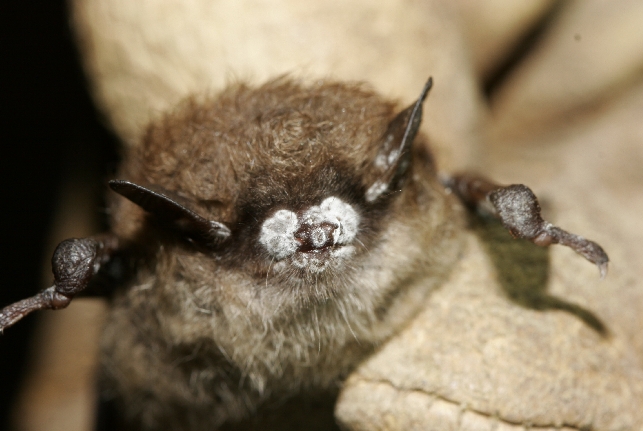
White
Nose Syndrome (WNS) is a disease associated with the deaths of “at least 5.7 to
6.7 million North American Bats.” The disease is named after the distinctive
fungal growth around the mouth and nose of bats. WNS was first discovered in
the Schoharie County of New York in February 2006, but has grown to hundreds of
caves all over the United States as of 2013.
“It
is believed that Pseudogymnoascus
destructans is the sole cause
of the disease.” The white fungal growth around the bats mouth was analyzed
microscopically, to find that it is a form of the Pseudogymnoascus destructans, which is the fungal infection
associated with WNS.
White
Nose Syndrome has greatly decreased bat populations in caves throughout North
America. Some species of bats have already been listed as endangered. Bats play
a big part in our environment. Without bats, “at least 2.4 million pounds of
insects will go un-eaten and become a burden to farmers, possibly leading to
crop damage.” – The United States Forest Service
North
American bats are reaching a death toll of 7 million. Scientists are starting
to find evidence about the fungal infection, and have come to conclusion that
WNS fungus can survive in caves without the presence of bats.
Scientist,
Hazel Barton (University of Akron professor), led the most recent research
studies. One issue they found was that WNS not only lives around the muzzle,
but also ears and wings, giving the bats “the appearance like they’ve been
dunked in powdered sugar.”
The UA professors held a comparison of WNS to other
cave dwelling relatives, and it was suggested that two closely related fungi
share the same nutritional needs (found in cave soil) and are being transferred
to the bats.
"Barton and her colleagues are zeroing in on when
the fungus transferred from environment to bat and the consequences of the
fungus' relentless ability to survive solely in caves, uninhabited by bats."
The article was very well written, but lacked more
information about WNS itself, so I researched it a bit. Hopefully the
scientists can figure out when the transfer of fungi happens, to help save millions
of bats!
Article:
http://www.sciencedaily.com/releases/2014/01/140129135108.htm
Wiki Page:
http://en.wikipedia.org/wiki/White_nose_syndrome
Friday, January 24, 2014
Blog Assignment 1
Microbes Hitch a Ride on the Subway
A Microbiologist from
Colorado University, Norman Pace, has studied various types of microbes in all
sorts of different places. He recently did a study of what kind of microbes
live in the subways in New York. It was an experiment to see what people were breathing
in the subway compared to what we breathe above ground. He performed these
tests to see “if any of its invisible critters are cause for worry.”
It was
concluded that the air in the station had no cause for alarm or fear. Its just
about the same air we breathe in any crowded outdoor space.
Pace did various tests in multiple
stations including Times Square, Grand Central, Union Square, Chambers Street,
Bowling Green, and the IRT station. The tests that were conducted involved two
samples of air about the volume of a persons breathe. Like I stated before,
they were comparing the air below ground to air above ground. So they also
sampled the air above.
The results
were shocking. In the subway samples, each “contained almost one million
bacteria” but tended to be the outdoor air. “Fungus loads are somewhat higher,
but there’s also a lot of rotting wood, so that’s not so surprising”, Pace
said. Five percent of the bacteria came from human skin.
“We saw
nothing unusual, certainly nothing threatening. At least, no more threatening
than the people standing next to you on the platform.”
http://www.nytimes.com/2013/05/28/science/microbes-hitch-a-ride-on-the-subway.html?adxnnl=1&adxnnlx=1390503744-gojqfkrXQVQW8aLOy4Sw6Q&_r=0
Thursday, January 23, 2014
Intro
I chose this course because I thought it would be an interesting science. It is also an FLC so I thought it was a good idea. My advisor also said that FLC's are a great combination of classes.
National Geographic Photo of a Microbial Intestinal Bacteria
http://wordlesstech.com/2012/12/30/microbes-small-small-world/
Subscribe to:
Comments (Atom)